Logging Off for Good: The People Who Chose Invisibility Over Influence
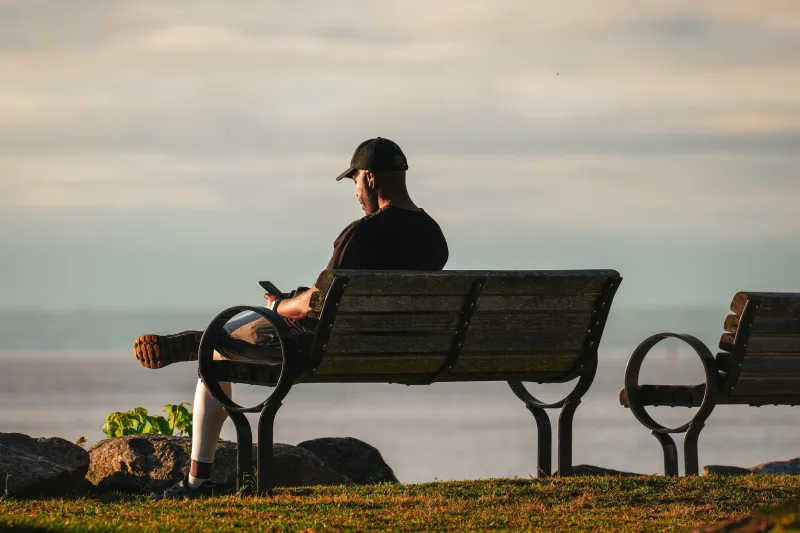
Somewhere between the tenth Instagram Story of someone's "honest morning routine" and the fourth LinkedIn post about a stranger's personal growth journey, a quiet rebellion started brewing. Not loud enough to trend. Not dramatic enough to screenshot. Just a slow, deliberate decision made by a growing number of people across the US who looked at the performance of modern digital life and said — actually, no thanks.
They're not canceling anyone. They're not going through a public meltdown. They're just... going dark. On purpose.
And the wild part? It's starting to look like the most aspirational thing you can do.
The Oversharing Economy Finally Has a Hangover
For the better part of a decade, the internet rewarded exposure. The more you shared, the more you mattered — at least algorithmically. Your wedding, your grief, your therapy breakthroughs, your body, your opinions about other people's opinions. All of it became content. All of it became currency.
We didn't stumble into this accidentally. Platforms were engineered to make visibility feel like value. Likes felt like love. Follower counts felt like proof of something. And for a while, a lot of us bought in — even those of us who swore we were too self-aware to fall for it.
But there's a fatigue that sets in when you've been performing your life for long enough. A low hum of exhaustion that comes from filtering every experience through the lens of how it'll land online. Did I document that sunset? Should I share this news yet? Is this feeling too raw to post or not raw enough to be relatable?
Some people hit that wall and pivot to a "more authentic" version of their content. Others hit it and just... stop.
Choosing Quiet Isn't the Same as Giving Up
Here's where the cultural conversation gets interesting. For a long time, stepping back from social media was framed as either a trauma response or a privilege — something you did after a public disaster, or something only people with enough clout could afford to do without disappearing entirely.
But the people going deliberately quiet right now don't fit that mold. They're not fleeing anything. They're not in crisis. They're making a proactive, considered decision to reclaim something they didn't even realize they'd handed over: the experience of a life that belongs entirely to them.
A 2023 Pew Research study found that a significant portion of American adults — particularly millennials and Gen X — have actively reduced their social media use, with many citing a desire for more privacy as a primary motivation. Not safety concerns. Not harassment. Just the simple, radical desire to exist without an audience.
There's something almost countercultural about that in 2024. In a world where visibility is supposed to equal relevance, choosing not to be seen is a quiet act of defiance.
The New Status Symbol Nobody's Posting About
Here's the irony that makes this whole thing delicious: privacy has become its own kind of flex.
Notice how the ultra-wealthy have always operated this way — no public social media, no oversharing, no performance of relatability. Old money has always understood that mystique is power. What's new is that regular people are starting to internalize that same logic.
When someone you know goes quiet online, there's a particular kind of intrigue that follows. What are they doing? What do they know that we don't? There's a magnetism to absence that constant visibility simply cannot manufacture.
The people who've stepped back often describe their offline lives in terms that sound almost luxurious — not because they've acquired more things, but because they've reclaimed their own attention. They're not mentally composing captions while watching their kid's soccer game. They're not half-present at dinner because they're thinking about the perfect way to frame the moment. They're just... there. Fully. For themselves.
That kind of presence is genuinely rare now. And rare things have value.
What You Actually Lose (And What You Don't)
Let's be honest about the trade-offs, because there are real ones. Going dark online in America in 2024 means opting out of certain social loops. You miss announcements. You stop being tagged. Some friendships, particularly the ones that were mostly maintained through passive digital consumption of each other's lives, quietly fade.
For people who've built careers on their personal brand or online presence, the calculus is even more complicated. The internet doesn't exactly reward sabbaticals. Algorithms punish absence. Audiences move on.
But here's what the people who've made this choice keep saying: the connections that survive the quiet are the ones that were real to begin with. The friendships that require you to actually text, call, or show up — those deepen. Everything else reveals itself to have been more performance than relationship.
There's a grief in that realization. But there's also a relief.
Reclaiming Agency in a World That Wants Your Data
There's a political dimension to this too, one that's worth naming. Every post, every story, every tagged location is a data point. The business model of social media is, at its core, the monetization of your attention and your information. Going dark isn't just a personal wellness choice — for some people, it's a conscious rejection of that transaction.
This is especially resonant for younger Americans who've grown up entirely inside these systems and are now old enough to interrogate them. Generation Z, despite being digital natives, is showing some of the most complex and ambivalent relationships with social media of any demographic. Many of them are acutely aware that their data is being harvested, their attention is being sold, and their identity is being shaped by algorithms they didn't consent to.
Choosing privacy, in that context, is a form of self-determination.
The Life That Doesn't Need a Caption
What strikes me most about the people who've made this shift isn't what they've given up — it's what they describe gaining. A particular kind of confidence that doesn't need external validation. Experiences that feel complete without documentation. A sense of self that isn't constantly being negotiated in public.
There's something deeply appealing about that. Not because visibility is inherently bad — it's not. Sharing, connecting, building community online can be genuinely meaningful. But there's a difference between choosing to share and feeling compelled to.
The people going dark aren't anti-technology or anti-social. They're just drawing a line between the life they live and the life they perform. And for a lot of us watching from our feeds, still half-composing our next caption while we scroll — that line looks incredibly, enviably clean.
Maybe the most radical thing you can do right now isn't to go viral. Maybe it's to simply go home, close the app, and let something beautiful happen that nobody else will ever see.
That's not disappearing. That's finally showing up — for yourself.