The Slow Fade: Why We'd Rather Disappear Than Say Goodbye
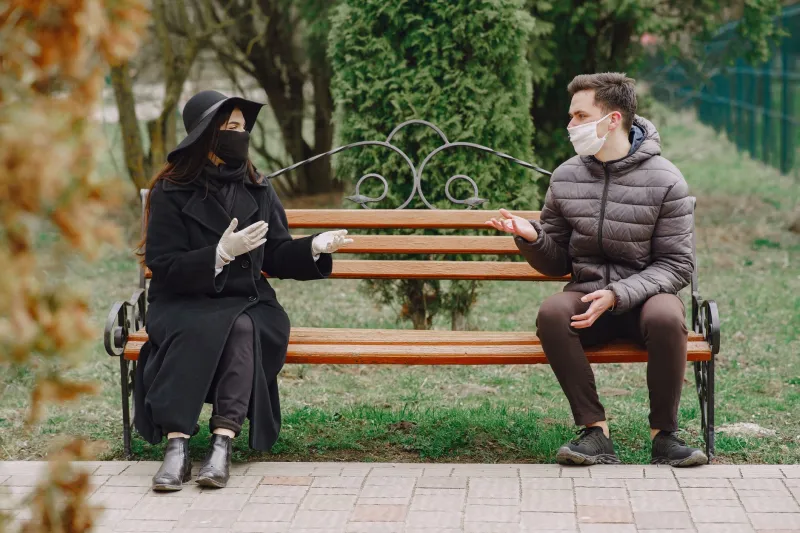
There's a friendship I've been quietly ending for about two years now. No fight. No dramatic falling out. Just... less. Fewer texts. A birthday message instead of a phone call. A 'seen' receipt I let sit for three days before responding with something short enough to signal that I'm busy but not so cold that it reads as hostile. She probably thinks we're just in one of those 'life gets hectic' patches. I know we're not.
And honestly? I'm not proud of it. But I also can't pretend it isn't happening.
The slow fade — that gradual, strategic withdrawal from a friendship that's run its course — is maybe the most common social ritual nobody wants to name out loud. We talk endlessly about romantic breakups, about closure and hard conversations and knowing your worth. But when it comes to friendships? We just... disappear. Incrementally. Politely. With plausible deniability baked right in.
The Exit Strategy We Never Agreed On
Here's the thing about outgrowing a friendship: it rarely feels like a decision. It feels more like a drift. One day you realize the calls got shorter, the hangouts got easier to postpone, and the version of yourself you perform around this person feels like a costume you stopped fitting into years ago. You're not angry. You don't hate them. You've just... moved on internally, while the friendship technically still exists on paper — or, more accurately, in your contacts list.
What makes the slow fade so seductive is that it requires no confrontation. You don't have to sit across from someone and say, I think we've grown in different directions and I'm not sure this friendship is serving either of us anymore. That sentence, while completely reasonable, feels almost impossibly cruel to say out loud to someone who hasn't done anything wrong. So instead, you let the silence do the work. You become strategically unavailable. You stop initiating. You wait for entropy to close the door you're too uncomfortable to shut yourself.
And most of the time, it works. Eventually.
Social Media Complicates Everything (Obviously)
The thing that makes modern friendship fade-outs genuinely weird is that social media has eliminated the natural ending point. In a pre-Instagram world, drifting apart from someone meant you actually drifted — out of sight, out of mind, until you bumped into each other at a mutual friend's wedding and exchanged a warm, slightly awkward hug. The relationship had a natural conclusion.
Now? You can be completely checked out of a friendship emotionally while still liking their vacation photos and watching their Stories. You're not in their life, but you're not not in it either. You exist in this weird liminal space — close enough to know their dog's name and their boyfriend's job title, distant enough that you haven't actually spoken in eight months.
This creates a specific kind of ambiguity that makes the fade both easier and more complicated. Easier, because the passive engagement creates the illusion of connection — for them, and sometimes for you. More complicated, because there's no clean break. No moment where the friendship officially ended. Just an ongoing, low-stakes digital presence that keeps the whole thing technically alive while the real relationship has long since flatlined.
And then they comment on your post with three heart emojis and you feel a weird mix of guilt and fondness and mild dread, and you think: I really should reach out. You don't, though. You won't.
Why We Can't Just Say It
Let's be real about why we avoid the honest conversation. It's not just awkwardness — it's the specific terror of being the person who caused someone pain when they didn't see it coming. Romantic breakups, as brutal as they are, come with a cultural script. There's language for it, a rough roadmap, a socially understood framework. But telling a friend I don't think I want to maintain this relationship doesn't have a script. It just has the look on their face when they realize what you're saying.
There's also the question of emotional labor — specifically, who gets assigned it. Having the direct conversation means taking on the full weight of the ending. You have to manage your own discomfort and the fallout of their hurt feelings. The slow fade, by contrast, distributes that weight diffusely. It's death by a thousand unreturned texts. Nobody has to be the villain. The friendship just... expires.
And yes, that's a little cowardly. But it's also deeply human.
The Mismatched Life Trajectory Problem
What's rarely discussed is how often friendship fade-outs are driven not by anything either person did wrong, but by life trajectories that simply stopped running parallel. You moved to a different city and built a whole new world. They stayed home and deepened roots you no longer share. You went through something — a loss, a career shift, a shift in values — that changed who you are in ways that made certain relationships feel like wearing shoes that no longer fit.
None of that is anyone's fault. But our culture has a really hard time accepting that some relationships have natural expiration dates, and that reaching that date isn't a failure. We treat friendship longevity as a virtue in itself, as if the length of a relationship is proof of its value. So when we feel ourselves pulling away, we experience it as a personal deficiency — a sign that we're disloyal, or cold, or bad at maintaining connections.
We're not, necessarily. We're just changing. And sometimes the most honest thing we can do is admit — at least to ourselves — that not every friendship is meant to follow us into the next chapter.
What We Owe Each Other (Maybe)
I'm not here to tell you that every fading friendship deserves a formal exit interview. Some relationships fade naturally and mutually, and there's a quiet grace in that. But I do think we owe it to ourselves — and sometimes to the other person — to get honest about what's actually happening instead of hiding behind the convenient fiction of being busy.
Because the slow fade isn't painless. It's just slower. And for the person on the other end who doesn't know it's happening yet, it can be genuinely confusing and hurtful in ways that a direct conversation, however uncomfortable, might have spared them.
I'm still working on this. Still figuring out when honesty is a kindness and when it's just me making myself feel less guilty. Still sending the occasional low-effort text to friendships I've already emotionally ended, because I don't have the courage to do anything else.
But at least I'm naming it. That feels like a start.