You Have 800 Contacts and Nobody to Call: The Real Loneliness Crisis
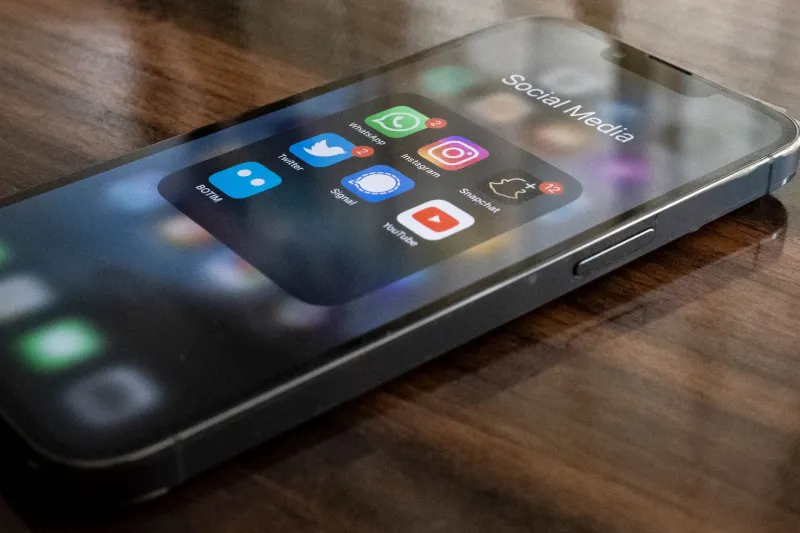
Let me ask you something uncomfortable. If something genuinely bad happened to you tonight — not crisis-bad, just hard bad, the kind of thing that makes you need to hear a friendly voice — how many people could you actually call? Not text. Not DM. Call, and expect them to pick up, and expect the conversation to go somewhere real?
For a lot of people, that number is smaller than they'd like to admit. And for a growing number of Americans, it's hovering somewhere close to zero.
This is the intimacy shortage. And it's hiding in plain sight behind a wall of group chats, follower counts, and LinkedIn connections.
The Illusion of Being Plugged In
We are, by every measurable metric, more connected than any humans who have ever lived. We carry devices that can reach essentially anyone, anywhere, instantly. We maintain relationships across time zones, across years, across the kind of distances that would have made friendship logistically impossible a century ago.
And yet. The U.S. Surgeon General's 2023 advisory on the loneliness epidemic didn't come out of nowhere. Research consistently shows that Americans report having fewer close friends than they did decades ago, that the average American has fewer people they can discuss important matters with, and that rates of social isolation — particularly among young adults and older men — have been climbing for years.
How do you square those two things? More connection, more loneliness. It seems like a contradiction until you look more closely at what kind of connection we're actually doing.
Connection Without Exposure
Here's what most of our digital socializing actually looks like: We share things. We react to things. We comment, we like, we share memes that express feelings we couldn't articulate ourselves. We watch each other's stories. We stay loosely updated on the broad contours of each other's lives.
What we rarely do is expose ourselves. Real intimacy — the kind that actually addresses loneliness — requires showing someone something that could be used against you. It requires being known in a way that carries risk. It requires saying "I don't have it together" to someone who will remember that you said it.
Digital communication has made that kind of exposure both easier and harder. Easier, because you can do it asynchronously, with time to edit, without having to watch someone's face. Harder, because the platforms we use are architecturally designed for performance, not confession. Your Instagram grid is not a safe container for genuine vulnerability. Neither is a group chat, really. The audience is always too ambient, too undefined.
So we share constantly but reveal rarely. And the result is that we feel simultaneously overshared-with — drowning in other people's curated moments — and profoundly unseen.
Why We're Bad at This Now
Some of it is structural. American culture doesn't make adult friendship easy. We don't have the built-in social infrastructure that other cultures do — the third places, the multigenerational community spaces, the expectation of sustained closeness beyond the nuclear family unit. After college, the default social structure kind of... dissolves. And we're expected to rebuild it through individual effort, which is exhausting and, for a lot of people, doesn't really happen.
Some of it is the pace. Genuine intimacy takes time — not just duration, but unstructured time, the kind where you're not accomplishing anything except being in each other's presence. That's increasingly rare. Everything is scheduled, optimized, goal-oriented. Even socializing has become a thing you fit into the calendar between other things.
And some of it — I think this is underacknowledged — is that we've lost practice. Intimacy is a skill. It requires a certain tolerance for awkwardness, for silences, for conversations that don't go anywhere neatly. It requires being comfortable not knowing what to say. A generation raised on the frictionless UX of digital communication is not, as a rule, comfortable with that kind of messiness.
The Oversharing Paradox
There's a specific flavor of modern loneliness that I think is worth naming: the loneliness of knowing a lot about people you don't actually know.
You might know that your college roommate is going through a rough divorce because she posts about it. You might know that your old coworker is struggling with his mental health because he's been open about it on Twitter. You might feel like you're keeping up with people, staying in their lives, being present — because you're consuming their content.
But you haven't talked to either of them. Not really. You've watched from a distance while they performed their pain in a public format, and you've felt like a witness, which is not the same as being a friend.
This is the intimacy shortage in its most modern form: we have access to more of each other's inner lives than ever before, and we're using that access as a substitute for actual contact. The result is a strange kind of closeness that provides none of the actual comfort of closeness.
What Genuine Connection Requires That We Keep Avoiding
I'm not going to tell you to delete your apps. That's not the point, and honestly, it's not realistic. But I do think there's something worth confronting here about what we're actually afraid of.
Real connection — the kind that addresses loneliness at its root — requires initiation, which risks rejection. It requires showing up imperfectly, which risks judgment. It requires making yourself a little bit vulnerable, which is genuinely uncomfortable in a culture that has monetized vulnerability into a content category while making actual vulnerability feel dangerous.
It also requires receiving someone else's realness, which is its own challenge. Sitting with someone's actual pain, without reaching for your phone, without pivoting to a relatable story about yourself, without offering a solution — that's hard. We're not great at it. But it's what makes people feel less alone.
The intimacy shortage isn't really about technology. Technology is just the latest surface it's playing out on. It's about the fact that genuine closeness is risky and slow and can't be optimized, and we live in a moment that is deeply uncomfortable with all three of those things.
You can have a thousand followers and feel completely invisible. Most of us already know this. The harder question is what we're going to do about it — and whether we're willing to make the slower, messier, riskier kind of contact that might actually help.