Vulnerability Has a Price Tag Now — And We're All Paying It
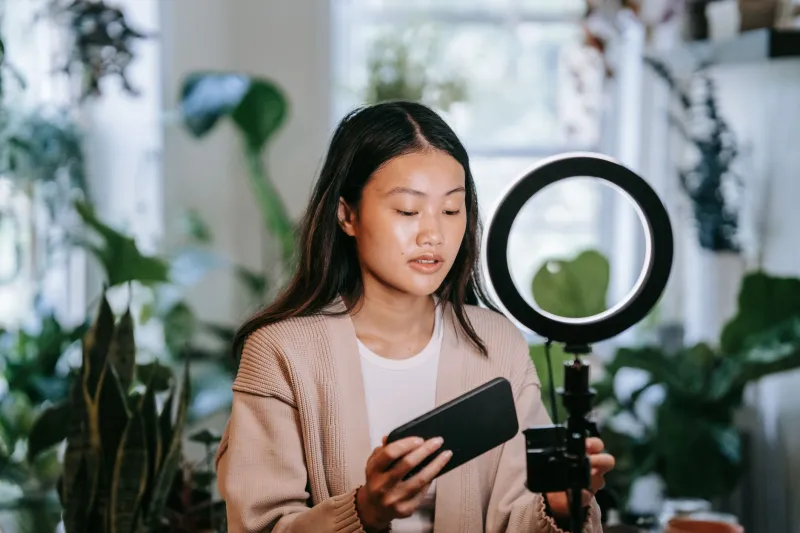
There's a specific kind of video I've watched more times than I can count. A creator — usually someone with a decent following, usually someone I genuinely like — sits down in front of their camera, clearly not wearing their usual ring light setup, and starts talking. Their voice cracks. They say something like, I've been wanting to share this for a while. And then they tell you something real: a diagnosis, a breakup, a family rupture, a mental health crisis they almost didn't survive.
By the end, I've felt things. Real things. I've been moved.
And then the video ends with a 30-second ad read for a vitamin subscription service.
I'm not saying that's wrong, exactly. Creators deserve to make a living. But something about that particular sequence — the rawness, the tears, the pivot to discount codes — has started to sit differently with me. Like I've been handed something intimate and then handed a receipt.
When Sharing Became a Strategy
Vulnerability didn't used to have a playbook. You told your friend something hard over the phone. You wrote in a journal. Maybe you told a therapist. The audience was small, the stakes were personal, and the point was just to say the thing.
Now, for millions of people operating in the creator economy, sharing difficult truths is also a content decision. And content decisions are never purely emotional — they're strategic. What's the hook? What's the thumbnail? Will this perform? Is this the right time to post, or should I hold it for a week when engagement is higher?
I want to be clear: I don't think creators are fake. I think they're human beings navigating an absolutely bizarre set of incentives that the rest of us don't fully understand. But I do think those incentives have changed the shape of vulnerability — what it looks like, how it's packaged, and crucially, how it's received.
When we know that someone has a financial stake in our emotional response, something shifts. Even when the pain is genuine — and it often is — we can't fully separate the feeling from the function.
The Authenticity Arms Race
Here's the thing about the creator economy: authenticity is the currency. Audiences have gotten very good at detecting polish, at sniffing out the rehearsed. So the pressure has shifted toward rawness, toward imperfection, toward the kind of unguarded moment that feels like it wasn't meant to be shared.
Which means creators are now in the business of manufacturing the appearance of unmanufactured moments. And that's an exhausting, philosophically strange place to live.
Some creators have talked openly about this — the way they've learned to sit with a painful experience just long enough to process it, but not so long that they lose the freshness of the emotion before they hit record. The grief has to be real, but it also has to be timely. The breakdown has to be genuine, but it also has to be watchable.
What does it do to a person to live like that? To turn their own emotional life into content production? I don't think we've fully reckoned with that question yet.
What It's Doing to the Rest of Us
And then there's the audience side of this — which is where it gets personal for most of us who aren't creators ourselves.
We've been trained, by years of consuming vulnerability-as-content, to expect a certain kind of emotional presentation from people sharing difficult things. We want the arc. We want the lesson. We want the moment where it comes together into something meaningful and shareable. We've become accustomed to pain that has been shaped for us.
And that's making it harder to be present for the unshapeable version — the friend who calls you crying without a resolution, the family member whose grief doesn't have a redemptive third act, the colleague who's just having a hard time without any particular insight to offer about it.
Real fragility is messy and inconclusive and doesn't always have a thumbnail. It doesn't give you something to repost. It just asks you to stay.
Are we still capable of that? Or have we been so conditioned by the packaged version that the raw one makes us uncomfortable?
The Cost of Being Fragile for Free
What worries me most is this: we may be entering an era where people feel unconsciously pressured to perform their struggles rather than simply have them. Not because they're chasing followers, but because the performance model has become so dominant that it's leaked into how we all relate to our own pain.
I've caught myself doing it. Framing a hard week in my head like it's a caption. Reaching for the lesson in an experience before I've actually felt it. Thinking about who I'd tell and how, before I've even finished processing the thing itself.
That's the invisible tax of living in the creator economy, even as a civilian. The monetization of vulnerability doesn't just affect the people doing the monetizing. It reshapes the emotional culture around all of us.
Making Space for the Unmonetized Mess
I'm not arguing for silence. Sharing pain publicly has helped countless people feel less alone. There's real value in a creator talking openly about their anxiety disorder or their experience with loss — the comment sections fill up with people saying me too and I thought it was just me and that matters.
But I want us to hold space for the version of vulnerability that doesn't perform. The cry that doesn't get filmed. The bad week that doesn't become a post. The struggle that gets shared with one person, quietly, without a call to action.
Fragility doesn't owe anyone content. And the most honest moments of your life don't need to justify their existence with engagement metrics.
Some things are just yours. Let them be.