Your Feed Knows Your Secrets. Should You Be Worried?
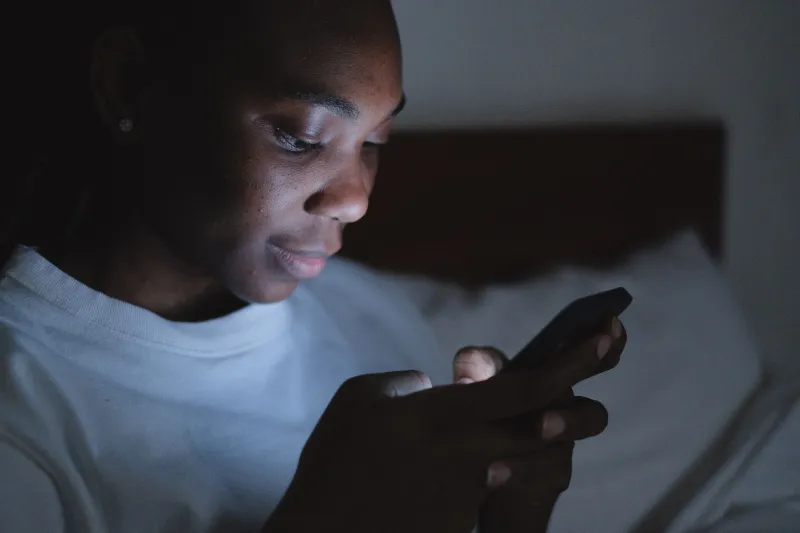
Let me paint you a picture. It's 11:47 PM on a Tuesday. You're lying in bed, telling yourself you're just going to check Instagram for five minutes. Forty-five minutes later, you've somehow spiraled from a friend's vacation photos into a rabbit hole of anxiety-reducing breathing exercises, minimalist apartment tours, and a very specific kind of sad indie music you didn't even know you needed. You didn't search for any of it. It just... appeared.
The algorithm knew.
And no, I don't mean that in a cute, relatable "the internet gets me" kind of way. I mean it in a way that, if you sit with it long enough, starts to feel genuinely eerie.
The Machine That Reads You Better Than You Read Yourself
Here's the uncomfortable truth: behavioral data collected by platforms like TikTok, YouTube, Instagram, and Spotify is, in many measurable ways, more accurate at predicting your emotional state, your preferences, and even your future decisions than you are at predicting your own. Studies out of Stanford and Cambridge have shown that algorithmic models can assess personality traits more accurately than a person's close friends after analyzing just a few hundred social media likes. After a few thousand interactions? They can outperform spouses.
Let that sink in for a second.
Your partner of seven years might not know you're quietly catastrophizing about your career. Your best friend might not know you've been watching videos about people who quit their lives and moved to rural Portugal at 2 AM. But your phone? Your phone absolutely knows.
Data scientists describe this as "behavioral residue" — the digital trail you leave behind not through what you say, but through what you pause on, what you rewatch, what you scroll past quickly, what you screenshot and never look at again. These micro-behaviors, collected at scale, build a psychological profile that is shockingly intimate.
"People assume the algorithm is just matching content to content," one data researcher explained in a conversation I had while reporting this piece. "It's not. It's matching content to you — a version of you that has been modeled from thousands of data points you never consciously offered up."
What Your Therapist Has That the Algorithm Doesn't (For Now)
To be fair, there's a meaningful difference between knowing about you and understanding you. A good therapist doesn't just identify your patterns — they help you make meaning out of them. They ask the uncomfortable follow-up questions. They sit in silence with you when the answer doesn't come easily. They hold context across years of your life and connect dots in ways that require genuine human intuition and emotional intelligence.
Algorithms don't care about your healing arc. They care about your engagement arc.
And that's the part that should make you put your phone down and stare at the ceiling for a minute. Because the goal of a therapeutic relationship is to help you grow beyond your patterns. The goal of an algorithmic recommendation system is to keep you locked inside your patterns — because that's where your attention lives, and attention is the product being sold.
So yes, your feed might know you're anxious. But it's not going to help you be less anxious. It's going to serve you more anxiety-adjacent content because that's what keeps you scrolling.
The Identity Problem Nobody's Talking About
Here's where it gets philosophically messy. If a system knows your behavioral tendencies better than you do — and then uses that knowledge to shape what information you're exposed to — at what point does it start influencing who you actually become?
This isn't a hypothetical. Research on recommendation systems consistently shows that they don't just reflect existing preferences; they amplify and entrench them. If you watched one video about stoicism during a hard week, suddenly stoicism is a core part of your content diet. You didn't choose that identity — the algorithm assigned it to you, and then reinforced it until it felt like a choice.
Psychologists call this a feedback loop. I call it a slow, invisible rewrite of your personality that happens while you think you're just killing time.
The scariest version of this isn't radicalization, though that's real and well-documented. The scariest version is subtler. It's the gradual narrowing of your curiosity. It's the way your taste calcifies around what the algorithm decides you are, until you stop being surprised by yourself. Until you stop discovering things that genuinely challenge or expand you — because the system has decided expansion isn't what keeps you on the platform.
So What Do We Actually Do With This?
I want to be clear: I'm not here to tell you to delete your apps. That's a privileged, impractical answer that ignores how embedded these platforms are in modern connection, culture, and even livelihood. And honestly? Some of what the algorithm serves you is genuinely good. I've found music, ideas, and communities through recommendation systems that I never would have stumbled on otherwise.
But I think we need to stop treating our feeds as passive reflections of ourselves and start recognizing them as active participants in shaping who we are. That means developing a little more friction in your consumption habits. It means deliberately seeking out content that disrupts your expected categories. It means occasionally asking yourself whether you actually believe the thing you just watched, or whether you believe it because you've seen forty variations of it this week.
And maybe — not instead of therapy, but alongside it — it means getting more curious about what your behavioral residue actually says about you. Not to optimize yourself for the algorithm, but to reclaim the self-knowledge that the algorithm has quietly been hoarding.
Because the most radical thing you can do in 2024 is know yourself on your own terms. Before the machine gets there first.
Fahima Khan writes about culture, technology, and the messy overlap between the two. If your For You page is currently serving you content that feels disturbingly accurate, you're not alone.